At the summit
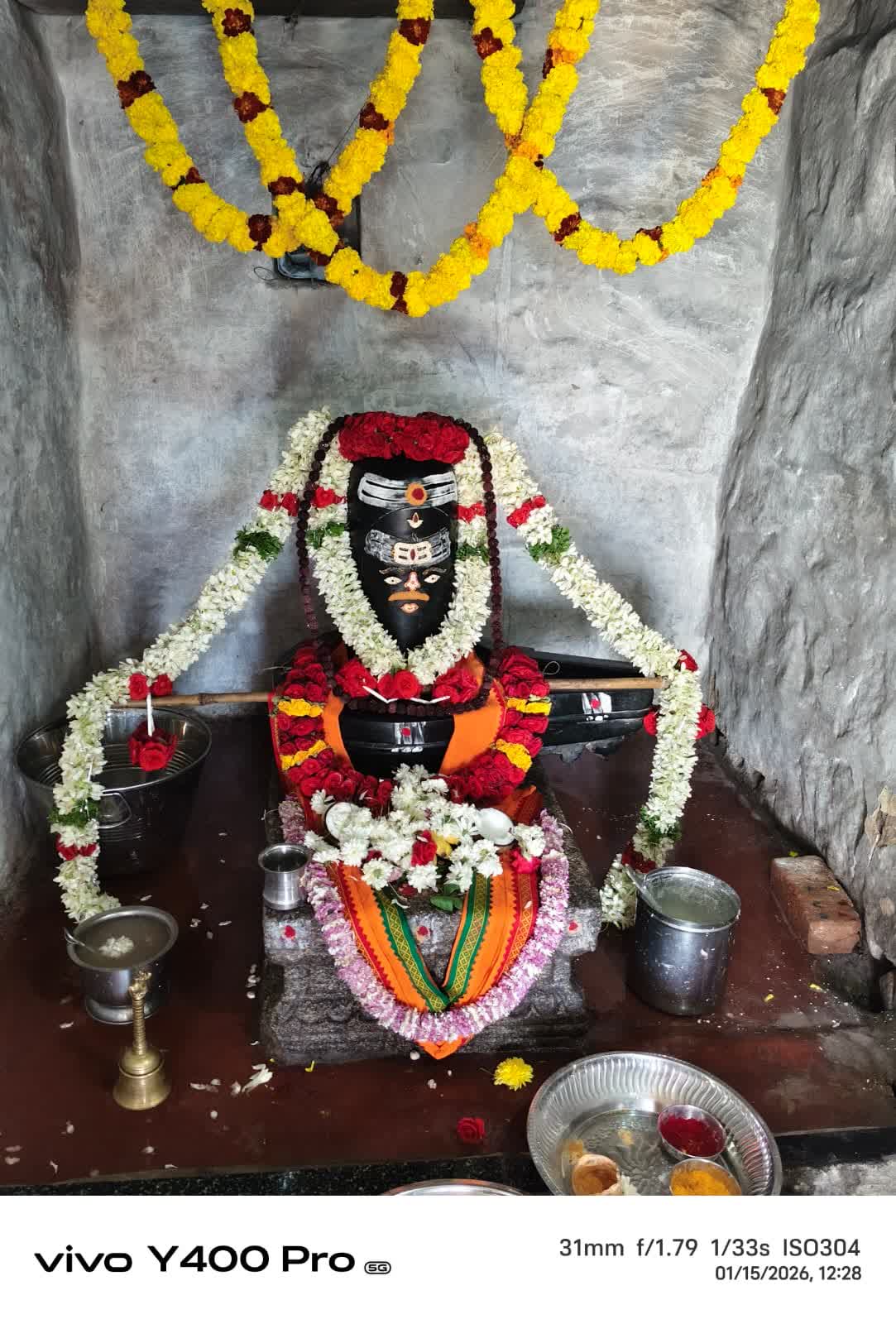
Sri Ambojeshwara
The ancient Shiva sanctum on the hilltop, visited by Sita and Rama during their exile. A small Shivalinga, a Nandi sculpture, a stone pillar — and centuries of unbroken belief.
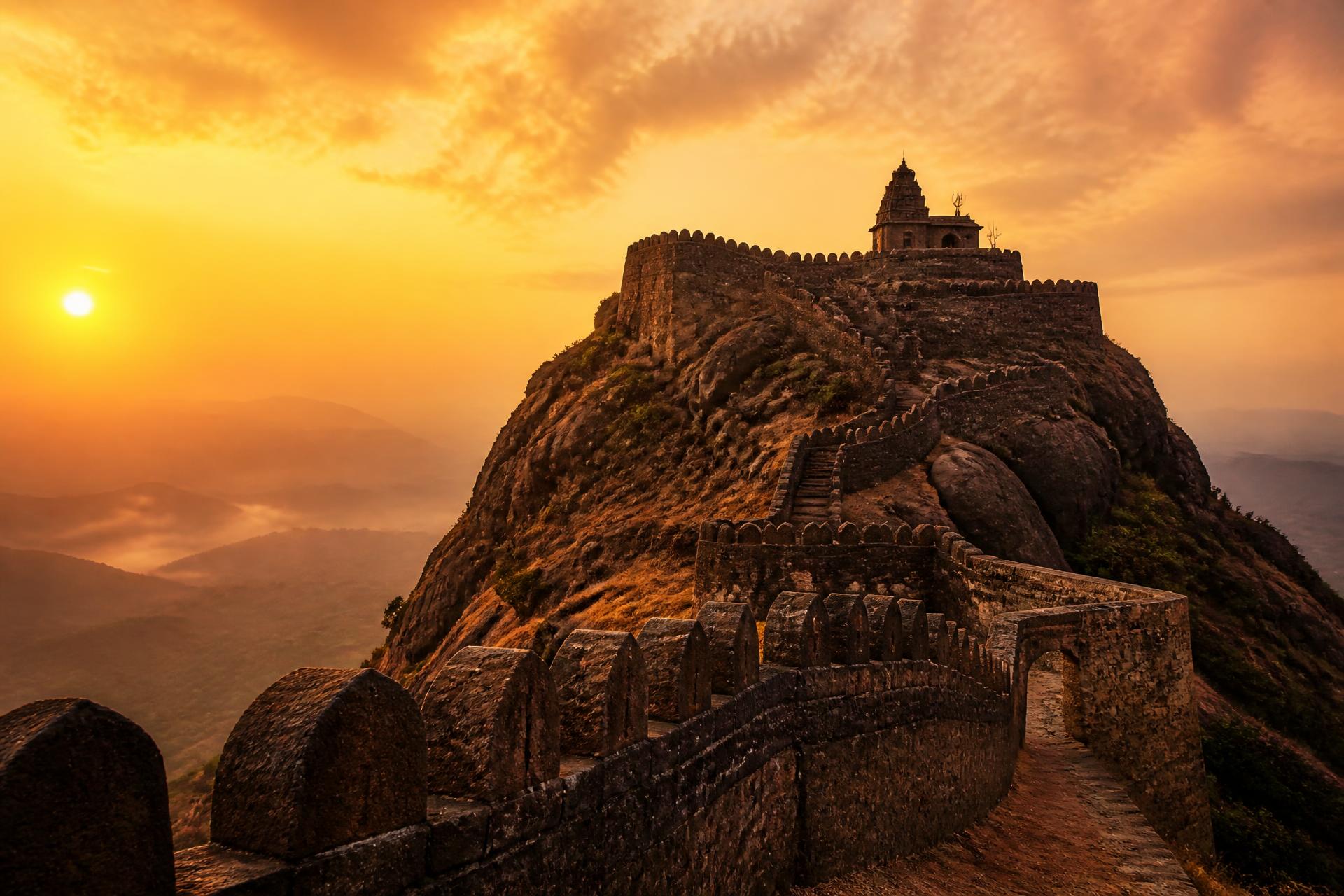
A 3,499 ft rock hill in Chintamani Taluk, sanctified since the Ramayana — where the Yenne Kanija spring still flows, a 300-year-lost Veeranjaneya now stands worshipped, and Goddess Durga returns.
Ambajidurga hill rises 3,499 feet above the plains of Chintamani taluk in Chikkaballapur district. Its name and its shrines are woven into the Ramayana — into the years of Sita and Rama’s exile, into the long lineage of Palayagara fortresses, and into the living devotion of the villages that ring its base.
At the summit stands the ancient temple of Sri Ambojeshwara. Before it, the Yenne Kanija — a stone well opened by the touch of Mother Sita — flows with sweet water through every season. On the slope, the long-lost Sri Dustasamhara Veeranjaneya Swamy has returned to worship, and a new sannidhi for Goddess Durga is being consecrated.
From the summit sanctum to the slope, four sacred places mark the pilgrim’s climb up Ambajidurga.
The ancient Shiva sanctum on the hilltop, visited by Sita and Rama during their exile. A small Shivalinga, a Nandi sculpture, a stone pillar — and centuries of unbroken belief.
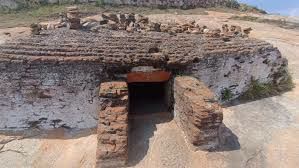
A 9 ft square well opened by Mother Sita herself — once flowing with oil for the lamp, now with healing water that never stops, in any storm, in any season.
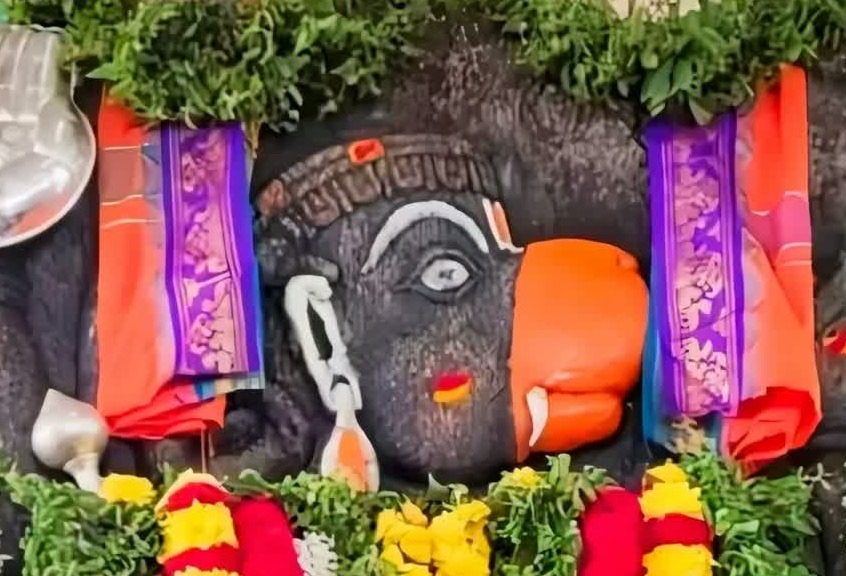
A rare ugra form of Anjaneya — tusked, the demon Akshayakumara underfoot, dagger at the waist, Saugandhika flower in hand. Hidden in wilderness for 300 years and returned to worship in 2014.
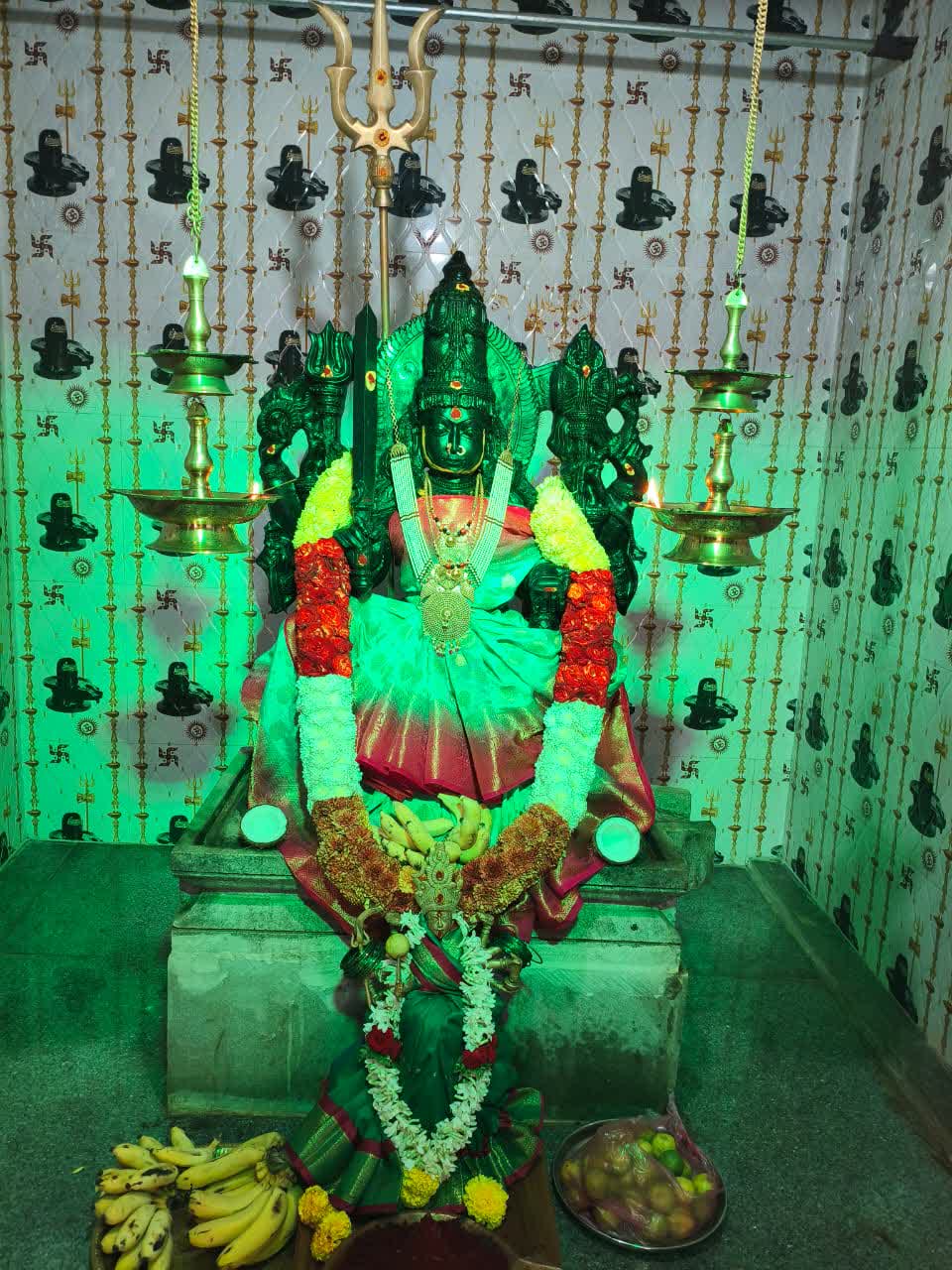
Foretold by Sri Kaivara Yoga Narayana Yathindra Tataiah, the Mother returns to Ambajidurga. The temple is complete; the Pratishtha is set for 14 November 2025.
During the exile, with no oil for Ambojeshwara’s lamp, Mother Sita strikes the rock and brings forth the well.
Palayagara chieftains, and later Ambaji Rao of the Chintamani Rao lineage, raise three rings of stone walls.
After Tipu’s defeat, the Karnatic forces destroy the fort. The Veeranjaneya shrine vanishes into wilderness for 300 years.
A dream guides Sri Narayana Swamy of Kavaluganahalli to the lost idol; first worship is offered the same day.
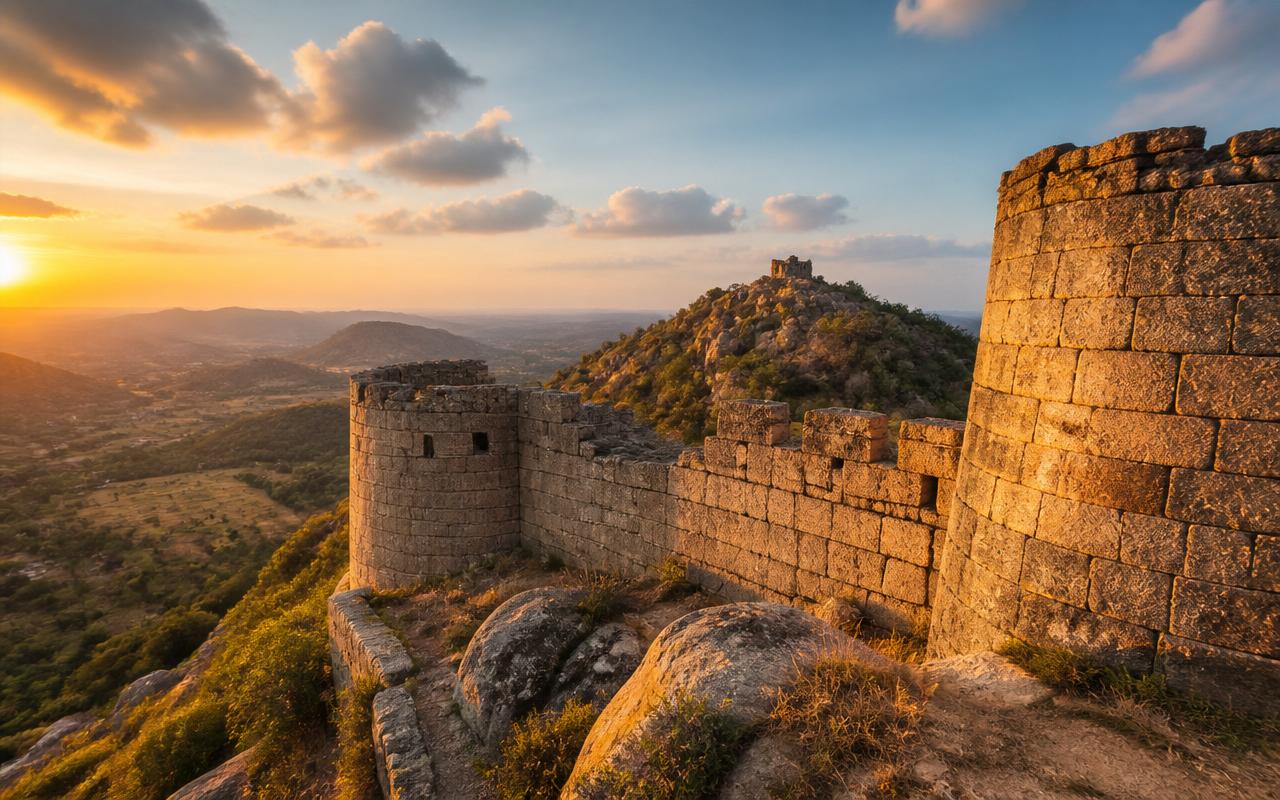
Square-then-round bastions, a single decorated western gate, rare carvings of elephants, monkeys and the Viruja war-art — architectural touches Dr. S. K. Joshi calls a “shining example” of late Palayagara craft, strengthened during Tipu’s time.
Explore the architecture →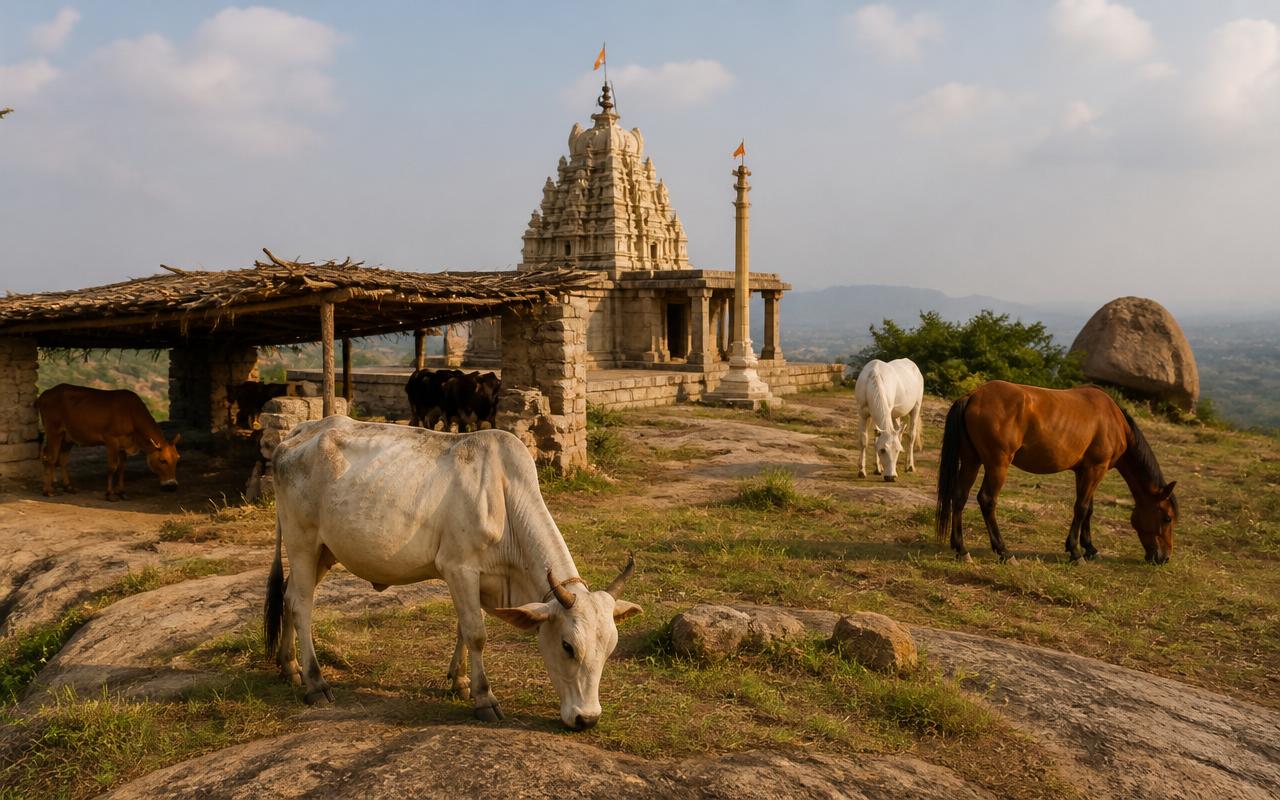
Beside the Veeranjaneya temple, more than 40 cows and 10 horses take shelter. They graze freely across the hill through the day and return on their own before 4 in the evening.
About the Trust →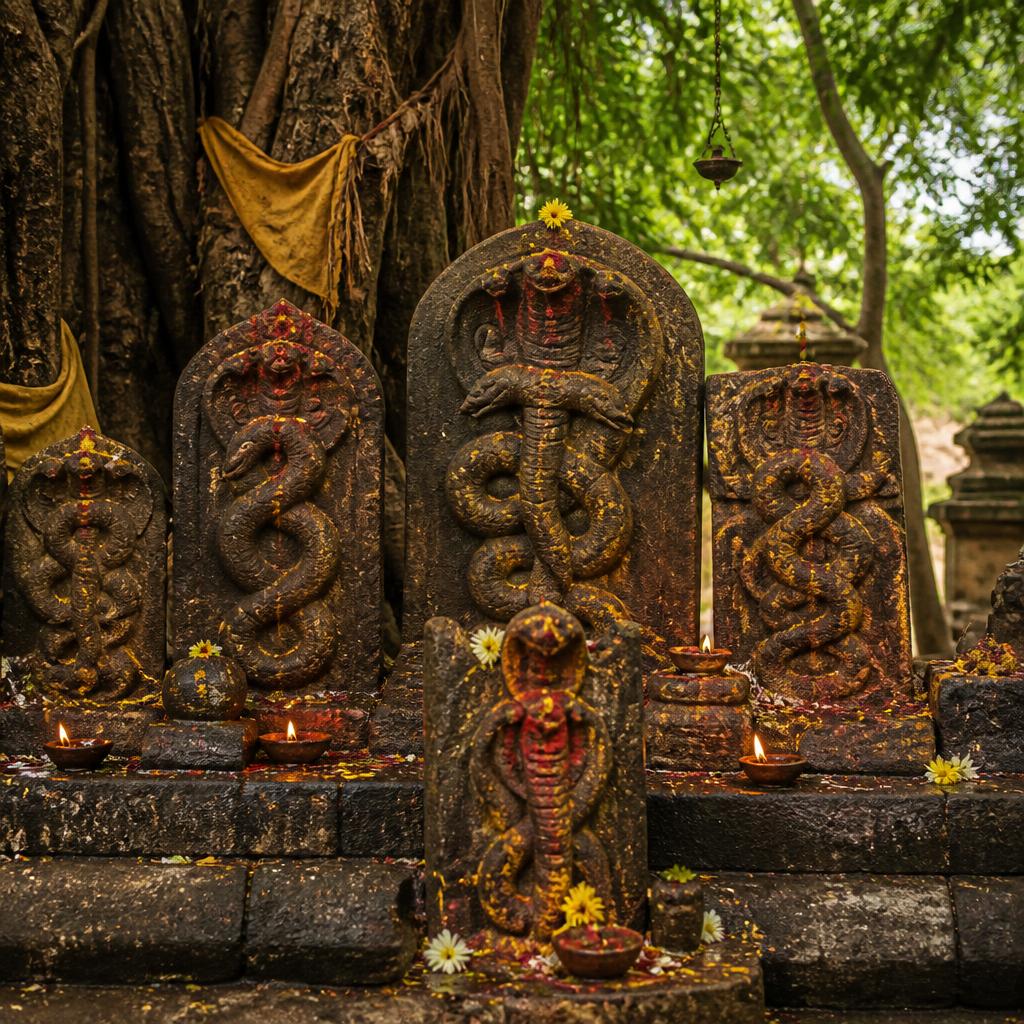
A little further along the path, the Naga deities receive their devotees. Beyond them rises the new temple of Goddess Durga — foretold by Sri Kaivara Yoga Narayana Yathindra Tataiah in his Kalagyana: that when daily worship is established on Ambajidurga, Durga Mata will be installed here. That promise is fulfilled on 14 November 2025.
See upcoming events →A free jeep runs the 3 km from Maha Kailasagiri to the Veeranjaneya Swamy temple. From there a renovated road, and the old cattle path for those who walk, leads to the summit and the Yenne Kanija.
Entry to the hill is strictly prohibited after 5:30 PM.